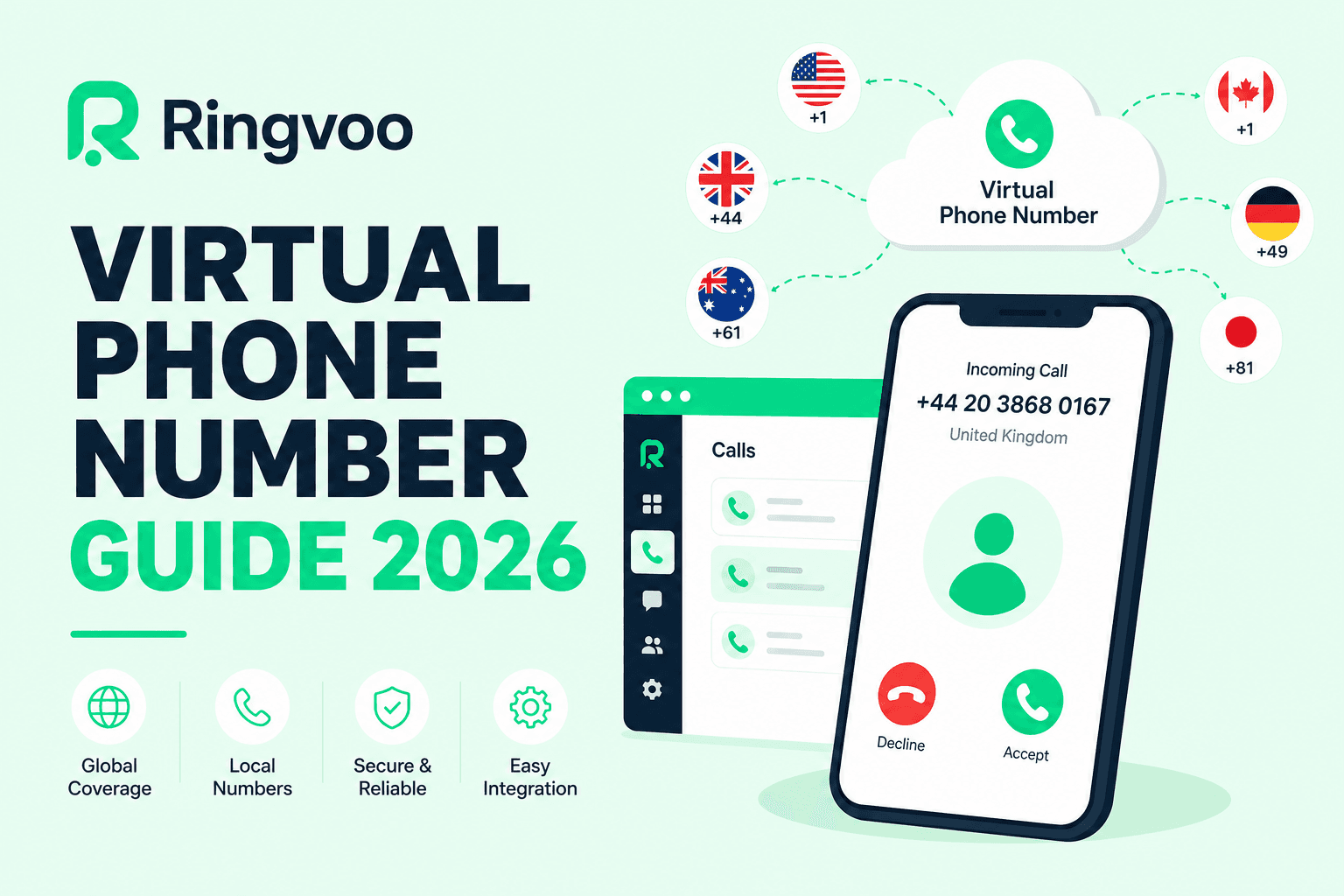
A virtual phone number guide for 2026 starts with a simple idea: your phone number does not have to live on a plastic SIM in your pocket. A virtual number is a real telephone number assigned to you in a chosen country or area code, routed over the internet to an app, browser, or forwarding destination. Businesses use them for local presence; remote workers use them for client callbacks; expats use them to keep a foot in their home country's phone system without maintaining a full mobile contract there.
If you have only ever used numbers from a carrier store, the concept can feel abstract—until you need a US line for job applications while living in Lisbon, or a UK number for bank callbacks while working in Dubai. This beginner-friendly guide explains how virtual numbers work, what they cost, how they differ from free messaging apps, and how Ringvoo combines virtual numbers with browser-based inbound and outbound calling.
Key Takeaways
- Virtual numbers are real PSTN numbers—people dial them from any phone; calls reach you over the internet, not through a local SIM.
- Use cases include local business presence, privacy, expat callbacks, and SMS where supported—not every number supports every feature.
- Costs split into monthly number rental plus usage for outbound/inbound minutes or SMS segments; compare total cost, not headline price alone.
- Browser-based platforms let you answer inbound calls on a laptop without installing heavy softphone apps.
- Regulatory requirements (address proof, ID) vary by country; some numbers need local documentation before activation.
What Is a Virtual Phone Number?
A virtual phone number is a telephone number that is not tied to a single physical phone line at your address. Instead, a provider provisions the number on the public switched telephone network (PSTN) and maps incoming calls (and sometimes texts) to your account on their platform.
When someone dials your virtual US +1 number, the call travels normally through carrier networks until it hits your provider's infrastructure. The provider then rings your configured destination: a browser session, mobile app, SIP phone, or another phone number via forwarding.
Outbound calls can often use the same number as caller ID, so recipients see a consistent local identity even if you are continents away.
Virtual numbers are also called cloud numbers, online numbers, or DIDs (direct inward dialing) in business telephony. Consumer products simplify the language, but the underlying mechanics are established enterprise technology scaled for individuals and small teams.
How Virtual Numbers Work: The Technical Path (Simply Explained)
You do not need to be an engineer to use virtual numbers, but a mental model helps:
-
Provisioning: You choose a country, area code, or number type (local, mobile, toll-free). The provider acquires the number from a numbering authority or carrier partner.
-
Routing rules: You set where inbound traffic goes—browser client, voicemail, forward to mobile, business hours rules, etc.
-
Inbound call: PSTN → provider SBC (session border controller) → your client via WebRTC or VoIP protocol.
-
Outbound call: Your client → provider → PSTN → callee's phone, often presenting your virtual number as caller ID.
-
SMS (where enabled): Text messages hit the provider's messaging gateway and appear in your inbox; outbound SMS sends through the same gateway with per-segment billing.
Ringvoo focuses on browser WebRTC for voice, with SMS trial availability on US and Canada numbers purchased through the platform. You log in, go online in the app, and inbound calls ring with an on-screen popup you can answer instantly.
Virtual Number vs. Regular SIM vs. Messaging App
Beginners confuse these categories. Here is the distinction:
Regular SIM/mobile plan: Number from carrier tied to radio access and monthly plan. Best for mobile data and SMS everywhere you roam, but expensive for maintaining multiple countries.
Virtual number: Number from cloud provider, internet-delivered voice/SMS. Best for specific country presence without living there.
Messaging app number (WhatsApp, etc.): App ecosystem identifier, not a full PSTN replacement for people outside the app.
For calling banks, government offices, or customers who dial you back, virtual PSTN numbers beat app-only identities.
Common Use Cases in 2026
Remote workers and freelancers
Clients trust local area codes. A consultant in Berlin serving US startups may want a +1 number for proposals and callbacks without US residency.
Expats and NRIs
Maintain a number your family recognizes. Banks and schools call you without international charges on their side. Pair outbound cheap minutes with inbound local identity—see how expats save on international calls.
Small businesses and solopreneurs
Separate work from personal cell, add business hours routing later, and keep CRM logs—without installing desk phones on day one.
Privacy and classifieds
Listing a number on marketplaces without exposing your personal mobile reduces spam—rotate or release the virtual number when done.
Travel and digital nomads
Keep a stable contact number while moving countries weekly. Answer in browser when Wi-Fi is available.
Customer support and sales
Outbound teams use local caller ID for answer rates; inbound lines for support tiers. Larger teams need queues and IVR—virtual numbers are the entry point.
Types of Virtual Numbers
| Type | What it looks like | Typical use | Notes |
|---|---|---|---|
| Local geographic | City area code (e.g., NYC 212) | Business local presence | May require address in region for some providers |
| National | Non-geographic national format | Brand-wide contact | Common in UK, EU |
| Mobile-style | Mobile number ranges | SMS-heavy workflows | Regulatory scrutiny higher in some countries |
| Toll-free | 800/888/877 etc. | Customer support hotlines | Caller free domestically; you pay inbound |
| Vanity | Spells word on keypad | Marketing | Premium pricing |
Not every provider offers every type in every country. Ringvoo's virtual numbers page lists available regions and capabilities as inventory evolves.
Costs: What You Actually Pay
Virtual number pricing has two layers:
Monthly subscription for holding the number—covers regulatory fees, number lease, and platform access.
Usage charges for inbound/outbound minutes beyond included allowances (if any), plus SMS segments sent/received where SMS is enabled.
Compare:
-
A $3/month number with $0.05/min inbound can beat a $15/month "unlimited" plan if you receive few short calls.
-
Heavy inbound support lines may need metered or bundled minute packs—evaluate peak month volume.
Ringvoo uses subscription billing for number rental (via Stripe) plus wallet credits for voice usage at published rates. Outbound international calls from your virtual line use the same transparent per-minute model as outbound from the main dialer.
Avoid hidden costs elsewhere in the market: porting fees, early termination, mandatory minute bundles, or SMS surcharges on toll-free inbound.
Get a virtual number on Ringvoo
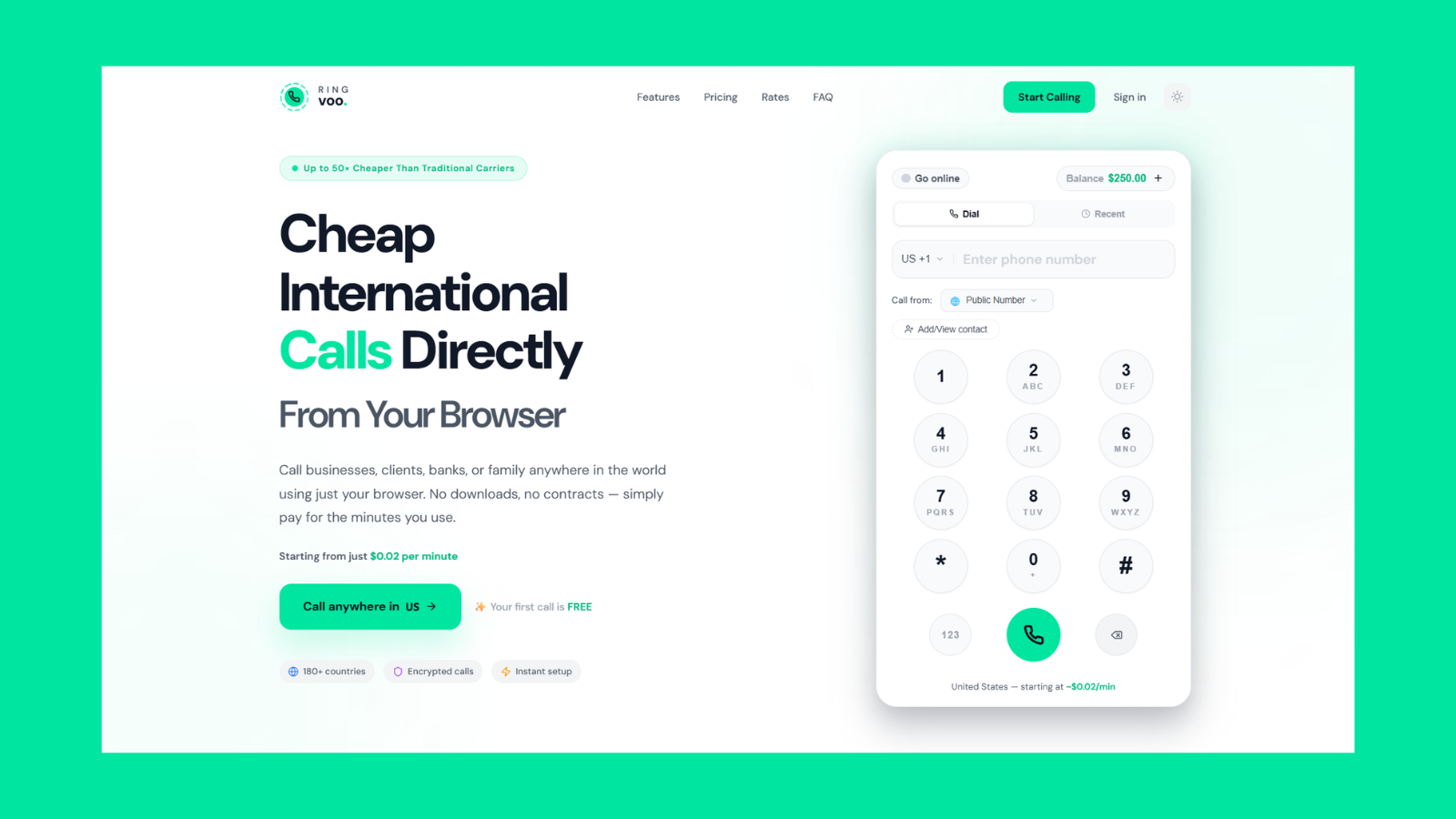
Pair a virtual phone number with browser calling: clients dial a local line; you answer in Ringvoo. Explore virtual numbers and outbound rates in one platform.
Try Ringvoo free — call from your browser · View international rates
Step-by-Step: Getting Your First Virtual Number
1. Define the job the number must do
Inbound sales? SMS verification for apps? Bank callbacks? The job determines country, mobile vs. local, and whether SMS is mandatory.
2. Check documentation requirements
Some countries require proof of address or business registration. Beginners often pick US/Canada or UK numbers first because onboarding is straightforward for many global users.
3. Choose a provider with browser access
If you live in browsers already, avoid solutions that force legacy softphones. Ringvoo lets you purchase a number and receive calls directly when you are online in the dashboard.
4. Configure forwarding and availability
Decide: answer only in browser when online vs. forward to mobile when offline. Ringvoo emphasizes in-browser answering with animated incoming call UI—ensure you go online during hours you want to receive calls.
5. Test inbound and outbound
Call the new number from another phone. Place an outbound call presenting the virtual caller ID. Confirm audio both directions before publishing the number on a website or resume.
6. Update accounts and profiles
Replace your personal cell on LinkedIn, invoices, and bank profiles gradually. Keep old number active until transition completes.
Virtual Numbers and SMS
SMS is often why people want virtual numbers in 2026—two-factor codes, appointment reminders, and client texts. Reality check:
SMS support is country and number-type dependent.
Some services (especially toll-free) are voice-only.
US/Canada SMS through Ringvoo is available on a trial basis for eligible purchased numbers; messages appear in your browser inbox.
International SMS pricing varies; segment counting matters for long messages.
App-based 2FA sometimes blocks VoIP numbers—have a backup auth method (authenticator app, email).
For voice-only needs, SMS limitations may not matter. For delivery drivers and marketplace sellers, confirm SMS before buying.
Legal, Compliance, and Trust Considerations
Virtual numbers are legal for legitimate use. Abuse (spam, fraud, impersonation) is not. Know:
KYC: Providers verify identity to comply with anti-fraud rules.
Emergency services: Virtual numbers may not support E911 the same way residential lines do—do not rely on them for emergency calling.
Business disclosure: Some jurisdictions require clear business identity on outbound sales calls.
Data protection: If you record calls, disclose and comply with GDPR, TCPA, or local equivalents.
Using a virtual number to pretend you are physically local when legally material (licensed professions, regulated finance) can cross lines—use local presence honestly.
Virtual Numbers vs. International Calling Apps
International calling apps focus on cheap outbound minutes. Virtual numbers add inbound identity. Many users need both:
Outbound to family abroad via pay-as-you-go international calling without a SIM.
Inbound on a home-country virtual line so grandma dials a familiar code.
Platforms that unify both reduce account sprawl. Compare options in best international calling apps but prioritize providers that cover your inbound and outbound pattern together.
Comparison: Virtual Number Providers (Feature Lens)
| Feature | Ringvoo | Generic VoIP app | Carrier second line |
|---|---|---|---|
| Browser inbound calls | Yes | Rare | No |
| Pay-as-you-go outbound | Yes | Varies | No |
| Monthly number fee | Yes | Yes | Add-on line cost |
| Credits expire | Never | Varies | N/A (plan minutes) |
| SMS (US/CA trial) | Trial | Varies | Yes on mobile |
| Setup complexity | Low | Medium | Store visit/eSIM |
Evaluate any provider against your must-haves rather than feature checklists alone.
Troubleshooting Common Beginner Issues
Calls go to voicemail immediately: You may be offline in the browser client. Go online in Ringvoo before expecting live answers.
One-way audio: Firewall or browser permission blocked microphone. Retry with headset; allow mic access for the site.
SMS not received: Number type may not support SMS; some senders block VoIP ranges. Test with a personal mobile sender first.
Bank will not call virtual number: Update profile; some institutions only call "mobile" classifications—ask support if your number range qualifies.
High inbound costs: Toll-free or premium inbound routes add up—track minutes and consider geographic local numbers for low-volume personal use.
Advanced Tips as You Grow
Multiple numbers: Separate sales vs. support lines; different countries for regional teams.
Team routing: Organization workspaces (where supported) share wallet and numbers with role policies.
Caller ID verification: Present verified personal or business IDs on outbound calls in addition to virtual numbers when trust matters—see guides on calling customer support abroad.
Integration: CRM click-to-call, webhooks, and API access may matter later—start simple, scale when call volume justifies.
Why Ringvoo for Virtual Numbers in 2026
Ringvoo targets users who want phone functionality in the browser without managing PBX hardware:
Purchase virtual numbers from the virtual numbers flow.
Receive inbound calls with real-time browser ringing when online.
Make outbound international calls at competitive per-minute rates from the same wallet.
Avoid monthly calling subscriptions; pay for the number plus what you use.
Keep credits indefinitely—no "use it or lose it" minute packs expiring monthly.
Cross-border workers calling India from the UAE or similar corridors can pair a virtual home-country line with corridor guides like calling India from the UAE for outbound savings.
Create your account, explore available numbers, and test with a small credit balance before committing marketing materials to a new line.
Frequently Asked Questions
Is a virtual phone number a real number?
Yes. It is a real telephone number on the public network that anyone can call from a normal phone. It is "virtual" only in how it reaches you—over the internet rather than a copper line at your desk.
Can I get a virtual number without a physical SIM?
Absolutely. That is the point. You need an internet connection and an account with a provider like Ringvoo, not a SIM from the number's country—though some countries require address verification paperwork.
How much does a virtual phone number cost per month?
Prices vary by country and number type. Expect a modest monthly subscription plus usage for calls and SMS. Ringvoo charges number rental via subscription and voice/SMS usage through wallet credits at listed rates.
Can I use a virtual number for WhatsApp or Telegram?
Some messaging apps accept VoIP numbers for registration; many do not or restrict them. Do not buy a number solely for WhatsApp without checking current app policies—have a backup verification method.
Do virtual numbers work when my computer is off?
Browser-based answering requires you to be online in the app or configured forwarding elsewhere. If you need 24/7 coverage, set forward-to-mobile rules or staffing—Ringvoo focuses on active browser sessions for inbound answer.
Can I port my existing number to Ringvoo?
Porting policies depend on carrier agreements and region. Check Ringvoo support for current port-in availability; many beginners start with a fresh number while keeping legacy lines during transition.
Are virtual phone numbers safe for business?
Yes when used with verified identity, secure accounts, and strong passwords. Use them for legitimate business contact, not to deceive customers about your location or licensing status.
Get Started With Your Virtual Number
Virtual phone numbers demystify quickly once you use one: a local line that lives in your browser, paired with affordable international outbound when life crosses borders. Define your use case, pick the right country and number type, and test inbound plus outbound before you share it widely.
Browse Ringvoo virtual numbers, sign up free, and build a phone presence that matches how you actually work in 2026—not how carriers sold phones in 2006. For outbound-only savings while you decide on inbound, read the cheapest way to call abroad in 2026.