
Living abroad changes almost everything about how you stay connected. Your local SIM works fine for day-to-day life in your new country, but the moment you need to reach your bank back home, coordinate with a family member across time zones, or speak with a government office in your country of citizenship, costs can climb quickly. Expats often discover that the same ten-minute call that felt routine at home now triggers roaming charges, carrier surcharges, or confusing per-minute rates that were never clearly explained at signup.
The good news is that cheap international calls for expats no longer require hunting for phone cards at convenience stores or accepting poor audio over free messaging apps when you need a real conversation. Modern browser-based calling platforms like Ringvoo let you dial any phone number worldwide from your laptop or phone browser, pay only for the minutes you use, and skip monthly contracts entirely. This guide walks through the most effective ways expats reduce international calling costs in 2026, when each method makes sense, and how to avoid the traps that still catch people after years abroad.
Key Takeaways
- Roaming and carrier international plans are rarely the cheapest option for regular calls to landlines and mobile numbers abroad; they are convenient but often priced for occasional travelers, not daily expat life.
- Browser-based calling with pay-as-you-go credits typically offers the lowest per-minute rates to most destinations, with transparent pricing you can check before you dial.
- Free apps only work when both parties use the same app; calling a parent's landline, a bank's toll-free line, or a doctor's office still requires a service that connects to the regular phone network.
- Small habits compound: using Wi-Fi, checking rates by country, batching non-urgent calls, and choosing the right method for landline vs. mobile destinations can cut monthly spend by 50% or more.
- Virtual numbers help expats who need a local presence in their home country for callbacks and two-way business communication.
Why International Calling Costs Hit Expats Harder Than Travelers
A two-week vacation and a multi-year assignment abroad are different financial animals. Travelers might tolerate a $30 roaming add-on for a short trip. Expats face recurring needs: weekly calls to aging parents, monthly conversations with tax advisors, quarterly check-ins with property managers, and occasional urgent calls to hospitals or schools in a country where they no longer maintain a primary mobile contract.
Carriers know this. Many international bundles are marketed as "unlimited" or "included" while hiding fair-use limits, excluded destinations, or rates that apply once you exceed a modest minute allowance. If your home country is India, the Philippines, Nigeria, or Mexico—common expat corridors—the per-minute cost through a legacy carrier plan can exceed what a dedicated calling service charges by a factor of five or ten.
Expats in the UAE, Singapore, the UK, and the United States also report frustration with caller ID and verification. Banks and government agencies often expect calls from recognized domestic numbers. That is where tools beyond simple cheap minutes matter: verified caller ID and virtual phone numbers become part of a cost-effective communication stack, not luxuries.
The Real Cost of "Free" and "Included" Calling
Before comparing paid options, it helps to understand why "free" often is not free for expats.
Messaging apps with voice (WhatsApp, Telegram, FaceTime) work well when your contact picks up inside the app. They fail when you need to reach a landline, a toll-free customer service queue, or someone who does not use smartphones reliably. Audio quality on Wi-Fi is usually good, but you are not calling the public telephone network—you are calling an app user.
Carrier "international packs" bundle a fixed number of minutes to selected countries. Read the fine print: landlines vs. mobiles may be billed differently, premium numbers may be excluded, and unused minutes expire. If your calling pattern is irregular—heavy one month, light the next—you pay for capacity you do not use.
VoIP apps with subscriptions (some Skype alternatives) charge monthly fees plus per-minute rates for certain destinations. For expats who call sporadically, subscription fatigue adds up. A platform with no monthly fee and clear per-minute pricing often wins on total cost of ownership, which is why many expats migrating off legacy services consult guides like best Skype alternatives in 2026 before switching.
Seven Ways Expats Save on International Calls
1. Switch to Browser-Based Pay-As-You-Go Calling
Browser-based international calling uses WebRTC technology to connect your microphone to the global phone network. You open a tab, sign in, dial a number in standard E.164 format (country code + number), and the recipient's phone rings normally—even if they have never heard of your calling provider.
Ringvoo is built for this use case: no app install required, no monthly subscription, credits that never expire, and rates visible before you place a call. Check current rates by country before a long conversation with family; knowing the per-minute cost removes the anxiety that keeps expats shortening calls unnecessarily.
For expats who work from co-working spaces or travel between countries, browser calling travels with your account. Your credits and call history stay tied to your login, not a single SIM card.
2. Use Wi-Fi as Your Default Voice Network
Roaming voice calls over cellular networks are among the most expensive ways to reach abroad. Expats who default to Wi-Fi calling through a VoIP or browser platform avoid roaming entirely. This pairs naturally with calling internationally without a local SIM—your data connection carries the call, not your mobile carrier's international voice tariff.
Practical tip: save important numbers in your dialer with the full country code. When you are in Dubai calling India, formatting numbers correctly avoids failed calls and redials that waste minutes and patience. Ringvoo's dialer accepts standard international formats, which matters when you are calling numbers you stored years ago in different formats.
3. Match the Method to the Destination Type
Not every country prices mobile and landline identically. India, for example, often shows different rates for mobile networks vs. fixed lines. Expats calling family on mobile phones should confirm which rate applies; those calling older relatives on landlines should check that bucket separately.
If you frequently call one corridor—say, India from the UAE—destination-specific guides like calling India from the UAE summarize formatting, typical costs, and timing tips (calling outside peak hours does not change Ringvoo's per-minute rate, but it improves answer rates when family is awake).
4. Replace Phone Cards and PIN Dialing
Physical international calling cards still exist in some expat communities, but they are fading for good reason. PIN management is awkward, advertised minutes rarely match reality after connection fees and billing increments, and customer support is often nonexistent when a card fails mid-call.
Digital pay-as-you-go credits solve the same problem with an itemized account history. You see each call, duration, and cost. When a call drops, you redial without re-entering a sixteen-digit PIN on a scratch card.
5. Consolidate Apps and Cancel Redundant Subscriptions
Expats sometimes accumulate three or four communication subscriptions: a carrier international pack, a legacy VoIP monthly plan, a second app for one country, and messaging apps for everyone who will use them. Audit your last ninety days of calls. If eighty percent go to three countries, a single platform with competitive rates to those destinations likely beats a stack of partial solutions.
Resources comparing the best international calling apps help shortlist providers, but the decision should always be validated against your destination mix and whether you need outbound-only or also inbound numbers.
6. Add a Virtual Number Only When Callbacks Matter
Outbound-only browser calling is the cheapest baseline. Some expats also need a local number in their home country so banks, schools, or clients can call them back without paying international rates. Virtual numbers carry a separate monthly cost through any provider, so treat them as a tool for specific workflows—not something every expat needs on day one.
Ringvoo offers virtual numbers for users who outgrow outbound-only patterns. If your parent only picks up when they recognize your old area code, a virtual number can preserve that familiarity while you live overseas.
7. Use Caller ID Verification for Trust-Sensitive Calls
Financial institutions and government hotlines sometimes block or flag unfamiliar international caller IDs. Ringvoo lets you verify your own number for outbound caller ID in supported cases, which reduces "spam likely" labels and increases the chance your call is answered on the first attempt. Fewer callbacks mean fewer billed minutes and less frustration.
Comparison: How Expat Calling Methods Stack Up
| Method | Typical monthly cost | Calls regular phone numbers? | Needs local SIM? | Best for |
|---|---|---|---|---|
| Cellular roaming voice | $15–$50+ add-ons | Yes | Uses home or host SIM | Emergency only |
| Carrier international bundle | $10–$30/month | Yes, limited list | Yes | Predictable short list of countries |
| Free messaging app voice | $0 | No (app users only) | No | Friends/family on same app |
| Browser pay-as-you-go (Ringvoo) | $0 fixed; per-minute | Yes | No | Regular calls to any number |
| Virtual number + browser calling | Number fee + usage | Yes, inbound + outbound | No | Business or callback-heavy expats |
| Legacy VoIP subscription | $5–$15/month + usage | Yes | No | Users already locked into ecosystem |
The table explains why expats optimizing for cheap international calls usually land on pay-as-you-go browser platforms for routine use, reserving carrier options for emergencies when Wi-Fi is unavailable.
Building a Low-Cost Calling Routine
Saving money is partly technology and partly habit. Expats who spend the least tend to share a similar routine:
Weekly planning. They note which calls require landlines (banks, government) vs. mobile family. Landline calls go through the browser dialer with verified caller ID if needed. Casual chats may stay on messaging apps when both sides prefer video.
Rate checks before long calls. A thirty-minute catch-up with siblings is wonderful; knowing it costs a predictable amount upfront makes it stress-free. Ringvoo displays pricing in the rates section so you are never surprised after hanging up.
Credit discipline without subscriptions. They top up wallet credits when balance runs low—no auto-renewing plans they forget to cancel. Credits not used this month remain available next month, which suits expat income that may fluctuate.
Documentation for tax and business. Itemized call logs help freelancers who bill clients or deduct communication expenses. Browser platforms with dashboard history simplify record-keeping compared to anonymous phone cards.
Expats: save on every call home
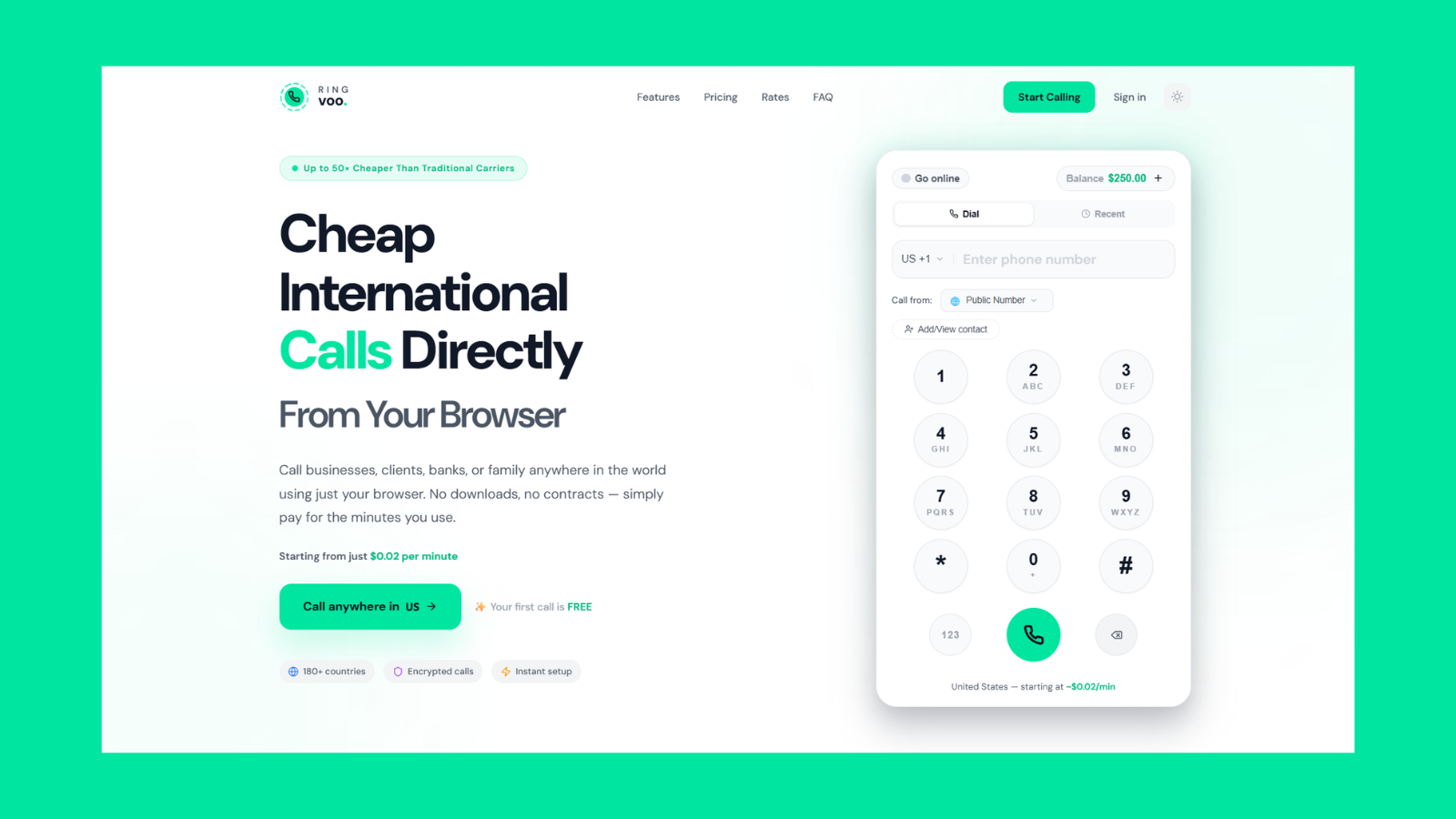
Replace carrier roaming with Ringvoo pay-as-you-go credits. Call family, banks, and government lines in your home country from anywhere you have Wi-Fi.
Try Ringvoo free — call from your browser · View international rates
Regional Scenarios: What Expats Actually Face
Middle East to South Asia
Large expat populations in the Gulf states call India, Pakistan, Bangladesh, and the Philippines daily. Host-country mobile plans often price these corridors high. Browser calling at sub-cent or low-cent per-minute rates to mobile networks changes the economics of daily check-ins. See corridor-specific guidance at calling India from the UAE if that is your main route.
Europe to Africa and the Americas
Expats in Germany, France, or the Netherlands calling Nigeria, Ghana, Kenya, or Brazil encounter wide rate spreads depending on mobile operator prefixes. Using a dialer that quotes rates by prefix category reduces guesswork. When in doubt, test with a short call before a long immigration or legal discussion.
North America to Asia-Pacific
US and Canadian expats calling Japan, Korea, Vietnam, or Australia for business hours overlap benefit from browser calling that does not require staying awake to match carrier "off-peak" windows—because billing is per minute, not time-of-day dependent on Ringvoo. Schedule calls for when people answer, not when your carrier discounts.
Remote workers and digital nomads
Nomads without a stable host-country contract rarely benefit from local carrier international packs. They rely on Wi-Fi and international calls without a SIM as default. A single Ringvoo account follows them across borders; only their Wi-Fi quality changes.
Hidden Fees and How to Avoid Them
Even smart expats lose money to fine print. Watch for:
Billing increments. Some services round up to the next minute on any partial minute. Ringvoo bills per minute with partial minutes rounded up—knowing this encourages concise goodbyes rather than lingering on hold after the conversation ends.
Connection fees. Older calling cards and some VoIP routes charge setup fees per call. Transparent per-minute pricing without connection fees is easier to budget.
Premium and toll-free numbers. Banks and airlines often use numbers that cost more to reach from abroad. If a toll-free line fails or costs more, check the institution's website for a direct international line formatted for overseas callers.
Currency conversion on top-ups. When adding credits, understand whether your card issuer charges foreign transaction fees on top of the stated call rates.
Auto-renew subscriptions. Cancel trial plans you do not want; set calendar reminders before annual VoIP renewals if you keep legacy services for one feature.
When Paying More Makes Sense
Cost optimization is not always about the absolute lowest per-minute rate. Expats sometimes choose slightly higher spend for reliability:
Legal and immigration calls where a dropped call means re-queuing for hours. Stable Wi-Fi plus a browser dialer beats cheap routes with unpredictable audio.
Medical conversations where clarity matters more than saving twenty cents. Use a headset, close bandwidth-heavy downloads, and call from a quiet room.
Business development when a virtual number presents a professional local presence. The monthly number fee may return multiples in client trust.
The goal is intentional spending, not minimum spending at any quality cost.
How Ringvoo Fits an Expat Communication Stack
Ringvoo sits in the practical middle ground expats actually need: real phone calls from a browser, pay-as-you-go wallet credits, no subscription lock-in, inbound capability when you add a number, and SMS trial features for US/Canada numbers where applicable. You create a free account, add credits through secure Stripe checkout, and start dialing within minutes.
Unlike app-only solutions, Ringvoo connects to ordinary phone numbers worldwide. Unlike carrier roaming, it does not care which country your laptop is in—only which country you are calling. Unlike disposable phone cards, it gives you a dashboard with history for disputes, taxes, and personal records.
If you are evaluating a broader switch from legacy tools, read the cheapest way to call abroad in 2026 alongside this guide. Together they cover destination-level tactics and platform-level choices.
Step-by-Step: Setting Up Cheap International Calls This Week
Day one — audit. Export or review your mobile bill for international line items. List top five numbers you call abroad and whether they are mobile or landline.
Day two — compare. Look up those destinations in Ringvoo's rates table. Multiply your typical monthly minutes by the quoted rate. Compare to your carrier charges.
Day three — trial. Sign up, add a small credit balance, and place two test calls: one short mobile, one landline if applicable. Confirm audio and caller ID behavior.
Day four — migrate contacts. Store numbers in international format in your phone and browser bookmarks to your dialer.
Day five — cancel waste. Remove redundant international packs or subscriptions you no longer need, keeping one backup method for true emergencies without Wi-Fi.
Most expats complete this transition in a single weekend and see savings on the next billing cycle.
Long-Term Savings: What One Year Looks Like
Consider an expat in the UAE calling family in India for twenty minutes daily. Carrier international add-ons might run $30–$50 monthly with caps and overage fear. At competitive browser rates to Indian mobiles—often a fraction of a cent to a few cents per minute—twenty minutes daily totals roughly six hundred minutes monthly. Even at conservative per-minute pricing, total spend frequently lands under $10–$15 with full transparency and no contract.
Multiply that gap over twelve months and the savings fund a flight home, school fees, or an emergency fund. The behavioral shift matters too: when cost anxiety drops, expats call more often, which is usually the whole point of leaving affordable minutes on the table.
Security and Privacy Considerations for Expats
Calling home sometimes means discussing finances, health, or legal matters. Use trusted networks—avoid public Wi-Fi without a VPN for sensitive conversations. Ringvoo processes payments through Stripe and does not store card details on its servers. Your call content travels through encrypted WebRTC paths to carrier interconnects, the same broad architecture category used by major communications platforms.
Be cautious of unofficial "cheap call" reseller apps with unclear ownership. An established browser platform with clear terms, support contact, and itemized billing is worth slightly higher per-minute rates compared to anonymous apps from unknown developers.
Frequently Asked Questions
Are browser-based international calls legal for expats?
Yes. Browser calling platforms route calls through licensed carrier partners in most jurisdictions. Expats are not circumventing law by using VoIP—they are choosing a different retail channel for the same public telephone network. Always comply with local regulations about recording calls or business telemarketing if applicable to your situation.
Do I need a VPN to use Ringvoo abroad?
Generally no. Ringvoo works wherever you have a stable internet connection and browser access. Some countries restrict certain VoIP services; if you are in a region with telecommunications restrictions, verify local rules. A VPN is optional for privacy on public networks, not usually required for Ringvoo itself.
How much do expats typically save switching from carrier roaming?
Savings vary by corridor and usage, but expats calling thirty to sixty minutes monthly to one country often report reductions from $40–$80 carrier charges to under $10 on pay-as-you-go browser rates. Heavy callers save more; light callers benefit from eliminating fixed monthly bundles they underuse.
Can I call toll-free numbers in my home country from overseas?
Toll-free behavior varies by country and carrier route. Some toll-free numbers accept international origination; others reject or bill at premium rates. If a toll-free line fails, look for a direct international number on the organization's contact page or use callback options after verifying your number through virtual numbers or verified caller ID.
Will my family see my old phone number when I call?
Ringvoo supports custom caller ID verification in supported cases, allowing you to present a number you own so recipients recognize you. Exact capabilities depend on destination and verification status; check your dashboard after logging in.
Do credits expire if I move to another country?
Ringvoo credits do not expire with time or relocation. Your wallet remains tied to your account. You continue calling from any country with internet access without transferring SIMs or re-buying bundles.
Is browser calling good enough for daily calls to parents?
For voice conversations, yes—when both sides value reliability over video and you have decent Wi-Fi or wired internet. Many expats replace daily carrier calls with browser calling and reserve video apps for weekends. Audio quality is typically comparable to mobile voice on stable connections.
Start Saving on Your Next Call Home
Expats do not need to accept carrier roaming as the cost of staying close to family and obligations abroad. By moving routine calls to a pay-as-you-go browser platform, checking rates before long conversations, and dropping subscriptions you outgrew, you keep money for what actually matters about life overseas—the trips home, not the phone bill getting there.
Create your free Ringvoo account, add credits when you are ready, and call any phone number worldwide from the browser you already use every day. For corridor-specific tips and deeper comparisons, explore best international calling apps and international calls without a SIM on our blog. </tool_call>
The first article was cut off mid-write. I'll finish it and write the remaining four articles.
Read