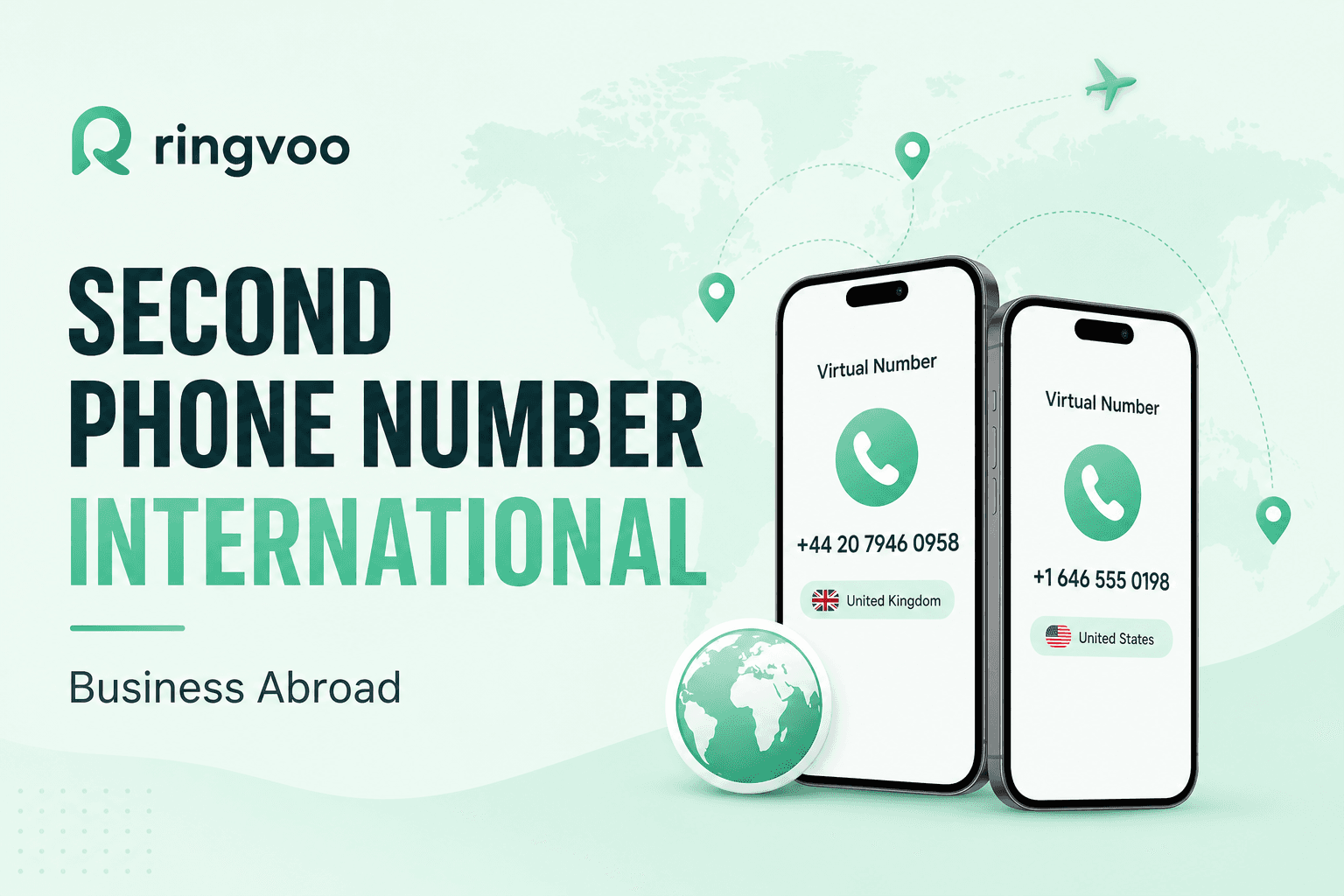
A second phone number for international use solves a problem dual-SIM phones only half address: you need a recognizable line in one country while living or working in another. Clients in New York expect a US area code. Your UK bank callbacks a London number. Your family dials a familiar home prefix. Carrying two physical SIMs works until you change countries, lose a slot, or need the line on a laptop during a video call.
Virtual second numbers — real PSTN lines routed over the internet — give expats, remote founders, and international students a home-country identity without maintaining a full mobile contract abroad. This guide covers when a second international number pays off, how virtual numbers differ from app-only aliases, and how Ringvoo virtual numbers combine inbound identity with browser calling.
Key Takeaways
- A second international number is a real PSTN line in your chosen country — callers dial it normally; you answer over the internet.
- Business abroad use cases include client callbacks, job applications, vendor verification, and professional caller ID on outbound calls.
- Virtual numbers beat dual-SIM when you move countries frequently, use laptops as your primary phone, or need numbers in multiple markets.
- Costs include monthly rental plus usage — evaluate total spend against the value of missed callbacks and rejected verifications.
- Start with fundamentals in the virtual phone number guide before choosing a country and number type.
Why Expats and Remote Workers Need a Second Number
Living internationally breaks assumptions baked into domestic phone systems. Institutions, employers, and customers trust numbers they recognize.
Bank and financial callbacks. Fraud departments, mortgage brokers, and payment processors often call back only numbers on file — frequently a home-country mobile or geographic landline. If your only active line is a foreign SIM, callbacks fail or trigger extra verification loops.
Job and visa applications. Recruiters and immigration offices expect a reachable number in the jurisdiction they operate. A US +1 line on your CV while you interview from Lisbon signals availability American HR systems understand.
Client and vendor trust. Freelancers and small agencies serving clients across borders present a local number for the market they sell into. A UK consultant serving British SMEs with a +44 line converts better than a foreign mobile that clients hesitate to dial.
Privacy separation. Keep your personal foreign SIM private while publishing a business second line on websites, invoices, and LinkedIn. When the contract ends, release the virtual number without changing your personal mobile.
Family reachability. Some families prefer calling a stable home-country number that forwards to wherever you are — especially relatives uncomfortable with international dialing apps.
| Need | Foreign SIM only | Second virtual number |
|---|---|---|
| Local client callbacks | Poor recognition | Strong local identity |
| Bank verification call-back | Often fails | Matches records on file |
| Outbound professional caller ID | Shows foreign mobile | Shows chosen market line |
| Move to new country | Change SIM strategy | Keep same virtual line |
| Answer on laptop | Requires phone nearby | Browser inbound |
Second Phone Number Options Compared
Dual SIM / second physical SIM
Two SIM slots let you maintain home and host-country mobile plans. Works well if you visit home regularly, can afford two contracts, and your phone supports dual standby reliably. Weaknesses: host-country SIM becomes your data line; home SIM may require minimum spend or expire; neither SIM gives you a laptop-ringing business line.
Google Voice and regional app numbers
Some app ecosystems offer free or low-cost numbers in specific countries (notably US Google Voice). Limitations include geo-restrictions, account residency requirements, and inbound-only or app-tethered workflows that break when you need PSTN outbound with matching caller ID.
Virtual PSTN numbers (cloud)
Providers provision real telephone numbers on the public network and route calls to your browser, app, or forwarding destination. You choose country, area code where available, and capabilities (voice, SMS, MMS). This is the most flexible second phone number international strategy for mobile professionals.
eSIM marketplaces
eSIM profiles from carriers or MVNOs give you a second mobile line digitally. Still a cellular product — monthly plan, data bundles, roaming rules — not a lightweight virtual business line you answer in Chrome.
For platform mechanics and regulatory basics, read the full virtual phone number guide.
Business Abroad: Setting Up Your Second Line
Pick the jurisdiction that matters. Match your number to where clients, employers, or institutions expect to reach you — not necessarily where you physically sit today.
Decide inbound vs outbound priority. Some users need inbound callbacks only; others need outbound calls that present the same number as caller ID. Confirm both directions before provisioning.
Choose number type. Local geographic, national, toll-free, and mobile-format virtual numbers carry different perceptions and pricing. US toll-free signals business scale; UK 020 signals London presence.
Plan browser answering. If you live on video calls and Slack, answering inbound on a laptop beats fishing a phone from another room. See receive calls in browser for WebRTC inbound workflows.
Document compliance. Some countries require address proof or ID for number activation. Budget setup time before a deadline-driven job search or company registration.
Outbound calls with your second number
Presenting your virtual line as outbound caller ID makes return calls coherent — clients see the same number they saved. Pair inbound virtual numbers with browser dial-out so one identity covers both directions without a separate mobile contract.
Cost Framework: When a Second Number Pays Off
Virtual numbers add fixed monthly cost. Justify them against failures a single foreign SIM causes.
Missed callback cost. A failed bank verification delays a wire transfer or account unlock — tangible time and stress.
Lost client cost. One missed inbound sales call can exceed a year of number rental.
Roaming savings. Returning home-country callbacks to a browser line avoids forwarding through international cellular routes.
| Profile | Second number worth it? |
|---|---|
| Student abroad 6–12 months | Maybe — if bank/job need home line |
| Remote employee, one employer | Often — HR and IT expect stable ID |
| Freelancer with US/EU clients | Yes — local presence drives trust |
| Permanent expat with family SIM kept active | Optional — depends on callback needs |
| Digital nomad, new country quarterly | Yes — virtual line travels without SIM swaps |
Compare outbound calling costs separately on Ringvoo rates and the broader cheapest way to call abroad 2026 guide.
Get a second international number — answer in your browser
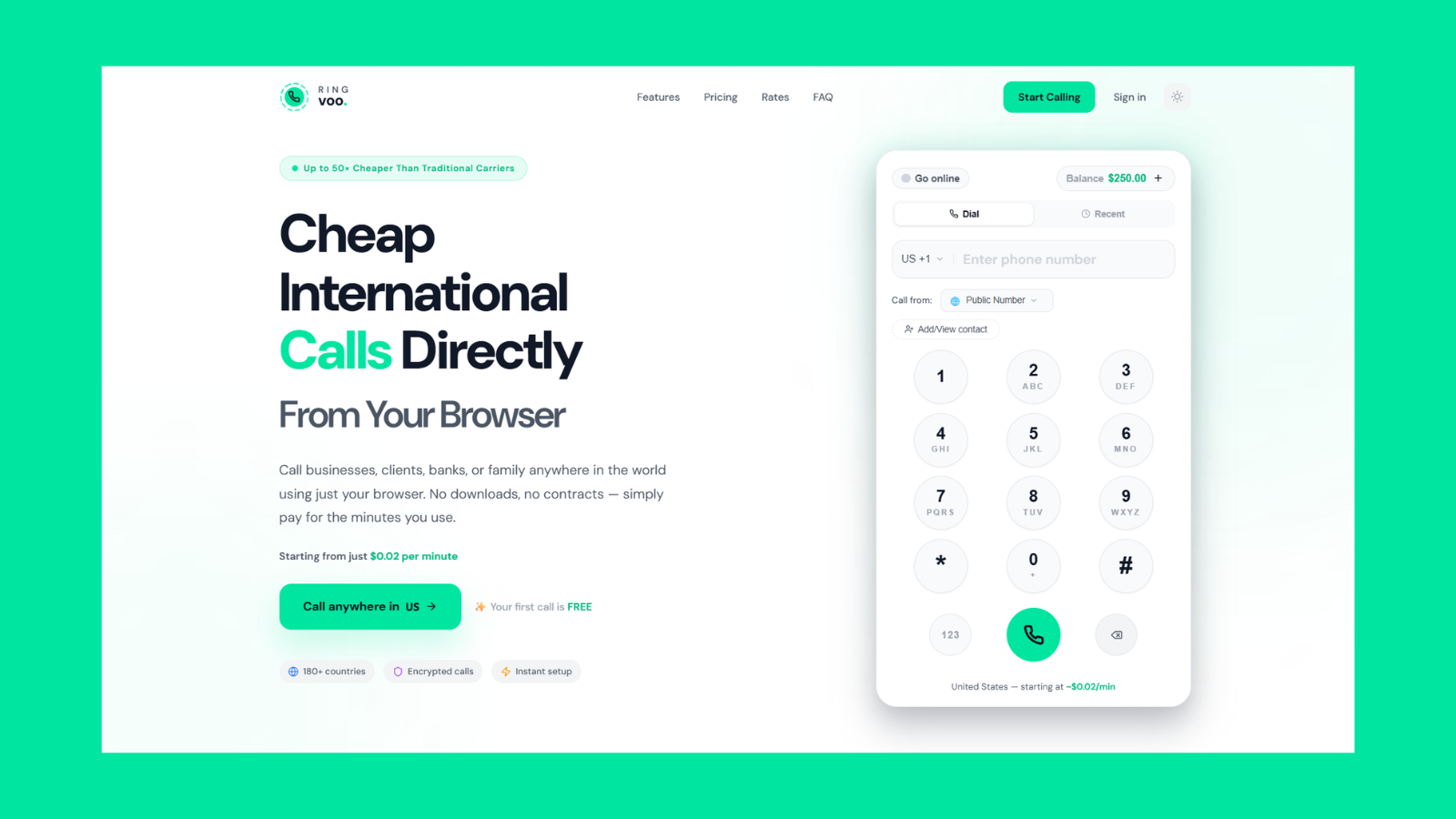
Provision a real PSTN number in your target country and answer calls in Chrome, Safari, or Edge. Pair inbound identity with pay-as-you-go outbound calling from the same platform.
Browse virtual numbers · Try Ringvoo free · View rates
Step-by-Step: Provision a Second International Number
- Define your primary use case — callbacks, client inbound, outbound caller ID, or SMS verification.
- Browse available countries and number types on Ringvoo virtual numbers.
- Complete any required verification for your chosen jurisdiction.
- Configure inbound routing to browser, forwarding, or voicemail.
- Test inbound and outbound with a colleague or second device before publishing the number on applications.
- Update institutional records — banks, payroll, clients — with the new reachable line.
If you operate without any local SIM, combine your virtual second line with international calls without a SIM for a fully Wi-Fi-based phone stack.
Second Number + Browser Calling Stack
The modern international professional stack often looks like this:
- Host-country SIM or eSIM for local data and emergency cellular
- Virtual second number for home-market identity and callbacks
- Browser VoIP for outbound PSTN to banks, support lines, and family landlines — see call customer support abroad
Ringvoo unifies virtual numbers and browser dial-out so you manage one wallet, one contacts list, and one login — simpler than juggling a consumer messaging app, a legacy Skype account, and a carrier forwarding code.
Enterprise teams with multiple market lines should evaluate Ringvoo enterprise for centralized number management and team answering.
Frequently Asked Questions
What is a second phone number for international use?
It is an additional telephone line — usually a virtual PSTN number in a country other than where you physically live — that lets people dial you on a familiar local or national format while you answer over the internet.
Is a virtual number the same as a second SIM?
No. A virtual number does not require a SIM slot or cellular plan. It is a cloud-routed PSTN number. A second SIM is a second mobile subscription on your phone.
Can I get a US or UK second number while living abroad?
Yes, subject to provider availability and any country-specific verification rules. Browse options on Ringvoo virtual numbers.
Can I answer my second number on a laptop?
Yes. Browser-based platforms route inbound calls to your logged-in session — no desk phone required. Read receive calls in browser for setup details.
Does a second number work for SMS verification?
Support varies by number type and country. Confirm SMS capability before relying on a virtual line for two-factor authentication codes.
How much does an international second number cost?
Expect monthly number rental plus per-minute inbound/outbound usage on most platforms. Compare total cost against dual-SIM contracts and roaming forwarding fees for your actual call volume.
Can I use my second number as outbound caller ID?
Many virtual number providers let you present the same line on outbound PSTN calls. Verify this feature when provisioning for business use.
Choose the Right Second Line for Life Abroad
The best second phone number for international use matches the market that needs to reach you — not the country where you happen to be sitting this month. Virtual PSTN numbers give expats, students, and cross-border businesses a durable identity that survives SIM swaps and timezone changes.
Start with the virtual phone number guide, provision a line on Ringvoo virtual numbers, and pair it with browser calling for a complete inbound-outbound stack. Create your free account and publish a number clients, banks, and family actually recognize.