Need to call your bank from abroad and worried about blocked numbers, endless hold music, or a phone bill that costs more than the fee you are disputing? You are not alone. Expats, travelers, and remote workers routinely need to reach financial institutions in their home country—to report fraud, unlock a card, verify a wire transfer, or answer compliance questions. Banks design phone systems for domestic callers. International origination adds friction: toll-free numbers that do not work overseas, caller ID that flags you as spam, and carrier roaming rates that punish a twenty-minute security interview.
This guide explains how to reach bank customer service internationally with less hassle, what to prepare before you dial, and why browser-based calling through platforms like Ringvoo has become the default tool for expats who call banks weekly without touching carrier international plans.
Key Takeaways
- Toll-free bank numbers often fail or cost extra from abroad; always look for a direct international line on the bank's website or secure messaging portal.
- Prepare verification data before calling—account numbers, recent transactions, security word, and callback number—to shorten hold times and avoid failed authentication.
- Caller ID matters: banks may block or deprioritize unknown international numbers; verified caller ID or a virtual number from your home country can help.
- Browser-based pay-as-you-go calling connects you to the regular phone network at transparent per-minute rates—ideal for long hold times without roaming shock.
- Secure channels first when possible: many tasks can start in-app or via encrypted chat, with phone as backup for complex cases.
Why Calling Banks From Abroad Is Different
Domestic callers enjoy predictable toll-free routing, recognized area codes, and IVR menus tested for local numbers. When you call from another country, several things break:
Toll-free (800/888/877) numbers are often unreachable or billed as premium when dialed from outside the issuing country. US banks may publish a separate "+1" direct line for international callers; UK banks may list a geographic London or international number.
Fraud systems score calls by origin, velocity, and caller ID reputation. A call from an unfamiliar international trunk can trigger extra verification—or silence if the system treats the call as high risk.
Hold times do not pause your meter on cellular roaming. A forty-minute queue at $2+ per minute is a financial event. Even "reasonable" roaming packs cap minutes quickly.
Time zones mean you call during your evening while the contact center is closed, or you wake at 3 a.m. to hit US business hours. Planning beats redialing closed lines.
Understanding these constraints shapes a better approach than simply saving the toll-free number from the back of your debit card.
Before You Dial: Preparation Checklist
Successful international bank calls start before the first ring.
Gather authentication materials
Most banks require some combination of:
- Full name and date of birth
- Account or card number (last four digits may suffice for initial routing)
- Social security number, national ID, or tax identifier (varies by country)
- Recent transaction amounts or merchant names
- Security questions or PIN (never share PINs in email; phone is the intended channel)
- One-time codes from SMS or authenticator app during the call
Have these written in a secure note—not spoken aloud in a café where others listen.
Find the correct international number
Log into online banking on a secure device. Navigate to Contact Us, Help, or Security. Search for "calling from outside" or "international collect." Download PDF statements sometimes list service numbers in fine print.
If only toll-free appears, try it once from a browser dialer. If it fails, use the bank's secure message center to ask for an international direct line. Many respond within one business day with a callable number.
Choose your calling environment
Use a private space, stable Wi-Fi or wired internet, and a wired headset if possible. Banks may ask you to press keypad tones for menu navigation; browser dialers support DTMF tones through the dial pad.
Avoid calling over public hotel Wi-Fi without a VPN when discussing account details.
Know your rights and limits
Some requests (large wire releases, beneficiary changes) cannot complete by phone alone—they require in-branch or notarized documents. Knowing this saves hours on hold for impossible outcomes.
Step-by-Step: How to Call a Bank From Another Country
Step 1: Try digital channels first
Reset passwords, lock cards, dispute charges, and update travel notices inside the mobile app or web portal when available. These paths are designed for travelers and leave an audit trail.
Reserve phone calls for voice-only workflows: complex fraud investigations, verbal escalation, or situations where the app locked you out.
Step 2: Format the number correctly
Use E.164 format: plus sign, country code, number without leading trunk zero. Example for US: +18005551234 if the bank publishes a reachable direct line—not all toll-frees work internationally.
For UK banks: +44 followed by the number, dropping the leading 0 from domestic format.
Ringvoo's dialer accepts pasted international numbers; verify the flag and country code before pressing call.
Step 3: Use browser calling instead of roaming
Open Ringvoo, confirm wallet balance, check the destination rate in the rates section, and dial. You pay per minute with no subscription—important when hold times stretch.
This approach aligns with broader expat strategies in our guide on how expats save money on international calls.
Step 4: Navigate the IVR efficiently
Listen for options aimed at "calling from outside the US/UK" or "card services" vs. "new accounts." Wrong department transfers add ten to twenty minutes.
If you reach a human, ask whether a direct department number exists for follow-up to skip the main IVR next time—some agents can provide internal extensions callable from outside.
Step 5: Document the interaction
Note agent name, reference number, date/time, and promised follow-up. Screenshot confirmation emails. If disputes continue, this record supports ombudsman or regulator complaints.
Comparison: Ways to Reach Your Bank From Overseas
| Method | Works with toll-free? | Typical cost (30 min) | Caller ID control | Best for |
|---|---|---|---|---|
| Cellular roaming | Sometimes | $15–$60+ | Home SIM number | Emergencies without Wi-Fi |
| Hotel room phone | Rarely | Very high | Unknown | Avoid if possible |
| Messaging app voice | No (not PSTN) | Free | N/A | Cannot reach bank IVR |
| Legacy VoIP app | Varies | Subscription + usage | Limited | Existing subscribers |
| Browser calling (Ringvoo) | Via direct intl. lines | Low per-minute | Verified ID options | Regular expat banking calls |
| Callback via secure message | N/A | Free | Bank calls you | When bank offers scheduled callback |
The table shows why expats standardize on browser calling plus verified numbers for financial institutions—not because other methods never work, but because cost and reach are predictable.
Common Bank Call Scenarios and Tips
Reporting fraud or a stolen card
Speed matters. Use the app to freeze the card first, then call to confirm replacement shipping address abroad. Ask whether expedited international courier delivery is available and if temporary digital cards work in your wallet app.
Travel notifications
Many modern issuers no longer require travel notices—geolocation and spending patterns auto-adjust. If yours still does, set notifications in-app. If you must call, have travel dates and countries ready.
Wire transfers and large transfers
Expect enhanced verification. You may need to answer outbound callback to a registered mobile number—a reason some expats maintain a virtual phone number tied to their home country for SMS and voice callbacks.
Mortgage, loan, or tax-related departments
Specialist teams often use different numbers than card services. Find the department line on your statement or lender portal rather than the general consumer hotline.
Closing accounts from abroad
Some banks require notarized forms or in-person closure. Phone agents can tell you the minimal path so you do not mail the wrong documents internationally.
Call your bank from abroad with Ringvoo
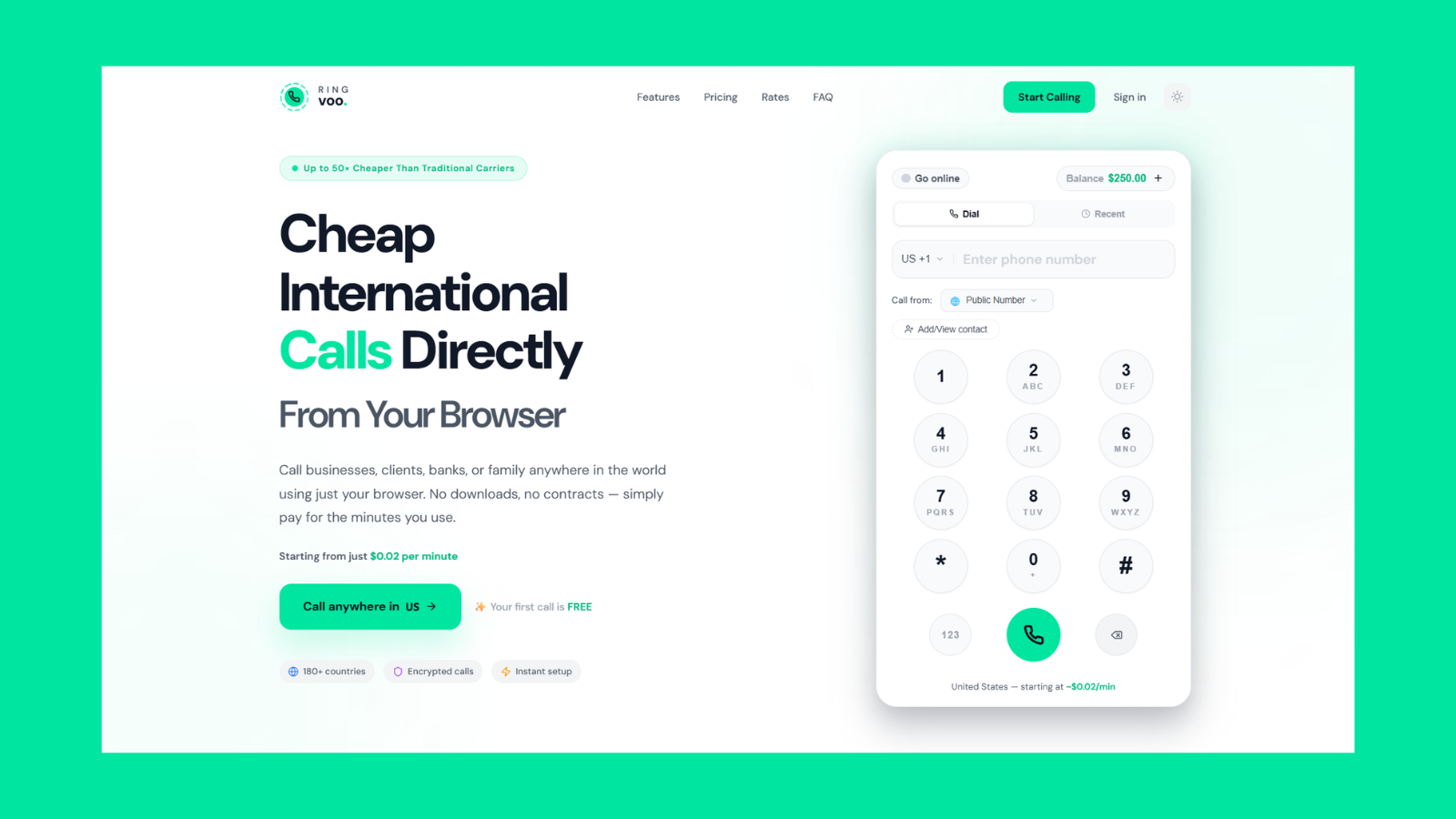
Use Ringvoo to dial your bank's published international line from Wi-Fi. Clear voice for security questions, hold times billed at low per-minute rates — not roaming prices.
Try Ringvoo free — call from your browser · View international rates
Caller ID, Trust, and Getting Through Security
Banks increasingly label unknown international calls as spam. Mitigations:
Verify your personal number for outbound caller ID where Ringvoo supports it, so the bank sees a number matching your profile.
Purchase or port a home-country virtual number if you receive many callbacks. Inbound calls to that number can ring in your browser when you are online.
Answer registered mobile if the bank policy requires callback to your on-file cell—ensure that SIM receives SMS abroad or use email-based OTP where offered.
Never trust unsolicited inbound calls claiming to be your bank. If someone calls you about fraud, hang up and dial the number on your card or official site yourself.
For related workflows outside banking, see how to call customer support in another country—many principles overlap.
Handling Long Hold Times Without Stress
Bank queues spike on Mondays, month-end, and after public data breaches. Reduce pain:
Call during mid-morning or mid-afternoon local time at the bank's headquarters, avoiding lunch hour and closing hour rushes.
Use speakerphone with mute when not speaking—browser calling keeps your hands free to complete secure app steps while waiting.
Monitor per-minute cost via known rates; even a sixty-minute hold at low per-minute pricing often beats roaming.
Ask for escalation paths politely if SLA promises were missed—reference prior case numbers.
If disconnect happens, redial immediately; some systems restore queue position with the same verification session within a short window.
Security Best Practices for Financial Phone Calls
Financial fraud via phone social engineering is common. Protect yourself:
Call only numbers from official bank domains or your card—not search engine ads or email links.
Banks rarely ask for full passwords or complete card CVV by phone; know what they legitimately request.
Use Ringvoo over trusted networks; log out of shared computers after sessions.
Enable app notifications for every transaction while traveling.
If an agent asks you to install remote access software, refuse—that is a scam pattern, not standard bank practice.
When Not to Call: Alternatives That Work Abroad
Secure messaging in online banking handles limit increases, address updates, and document upload.
Video KYC services for neobanks may replace some phone verification for new accounts.
Local branch partnerships—some global banks let you visit a partner branch abroad for notarized instructions.
Registered mail with tracking for formal disputes where phone notes are insufficient.
Phone remains essential for nuanced cases, but skipping unnecessary calls saves money and time.
Regional Notes for Major Banking Hubs
United States banks from Europe, Middle East, or Asia
Look for "+1" direct lines. Credit unions and regional banks may have shorter hours than megabanks. FDIC-insured institutions follow similar phone auth patterns; investment brokerages may use separate trading desk numbers.
UK and EU banks
Post-Brexit, some UK banks separated EU servicing numbers. EU residents banking with UK institutions should confirm which entity owns their account and which international number applies.
Indian banks for NRIs
NRI desks often publish dedicated UAE, UK, or US callback numbers. Specialized teams understand overseas address verification—calling the generic retail line wastes time.
Australian and Canadian banks
Time zone gaps are large from North America or Europe. Early morning or late evening calls align with Sydney or Toronto business hours.
Expats on specific corridors like calling India from the UAE may overlap banking and family calling—same dialer, different departments, similar rate transparency.
How Ringvoo Simplifies Bank Calls Abroad
Ringvoo is a browser-based international calling platform with pay-as-you-go credits, no monthly fee, and rates listed before you dial. For bank calls specifically:
You reach ordinary landline and mobile numbers on the public network—not app-to-app limitations.
Per-minute billing suits unpredictable hold lengths.
Credits never expire, so you are not forced into monthly VoIP subscriptions you use only for banking.
Optional virtual numbers and caller ID verification support callback-heavy financial workflows.
You can review call history in your dashboard for dispute documentation.
Check current international rates for your bank's country code before long sessions. Create a free account, add credits via Stripe, and keep a bookmark to the dialer for the next time your card issuer puts you on hold.
If you are comparing platforms after leaving Skype or similar tools, our best Skype alternatives in 2026 roundup places browser calling in context with other options.
Frequently Asked Questions
Can I call my bank's 800 number from overseas?
Sometimes, but often no—or the call connects at a premium rate. Banks increasingly publish non-toll-free international numbers for overseas customers. Check the official website or your online banking portal rather than assuming the card-back number works globally.
Is it safe to call my bank over Wi-Fi using a browser dialer?
Yes, when you use a reputable platform over a trusted network and call numbers you independently verified. Browser calling uses encrypted WebRTC to carrier gateways similar in class to other modern voice products. Avoid public Wi-Fi for sensitive calls unless you use a VPN.
Will my bank accept calls from an internet phone service?
Banks receive calls from many carrier routes; they care about authentication, not whether you used cellular or VoIP. Some IVR systems ask you to press keys or speak account numbers—Ringvoo supports standard DTMF dialing. If a specific number fails, try the bank's published international direct line.
How do I avoid roaming charges when calling my bank?
Do not use cellular voice roaming. Use Wi-Fi with a browser calling service like Ringvoo, or request a callback through secure messaging so the bank originates the call to your registered number.
What if the bank only calls back my US cell phone while I am abroad?
Ensure that SIM receives roaming SMS/voice, or update your profile to a number that works overseas—such as a verified virtual number you answer in Ringvoo when online. Alternatively, schedule callbacks when you have Wi-Fi calling access.
Can I dispute charges by phone from another country?
Most issuers allow dispute initiation by phone or app from abroad. Complex chargeback evidence may require written submission; phone starts the case and gives you a reference number.
Why was my call dropped after I passed security?
Long calls may hit session timers on some routes, or Wi-Fi may have blipped. Redial with your case number; banks often reconnect you to the same department faster when you mention an active ticket.
Call Your Bank With Confidence
Financial life does not pause when you cross a border. You should be able to call your bank from abroad without gambling on toll-free numbers, roaming bill shock, or blocked caller ID. Prepare your verification details, find the right international line, and use transparent browser calling for the minutes you actually need—including hold time.
Sign up for Ringvoo, check rates for your bank's country, and keep international banking from becoming an expensive side quest. For broader support scenarios beyond banks, read how to call customer support abroad next.